How Do I Choose the Right Travel eSIM for My Trip?
The Question Every Traveler Faces
You've decided to use an eSIM for your next trip. Smart move. But then you open a browser and suddenly there are twenty providers, each promising unlimited data, global coverage, and instant activation. How do you choose?
The answer comes down to four questions — and the order you ask them matters.
Question 1: Where Are You Going?
Coverage is the single most important factor. A plan that works perfectly across Europe may be completely useless if you're heading to West Africa or rural Southeast Asia. Before anything else, check whether the provider actually covers your destination — not just "190+ countries" in the marketing copy, but the specific country on your itinerary.
If you're crossing multiple borders on one trip, a regional pass is almost always better than buying individual country plans. It reduces admin, prevents gaps in coverage, and in most cases costs less per GB than stacking single-country eSIMs.
For business travelers, multi-network switching is worth paying attention to. The best providers partner with several local carriers in each country, so your eSIM automatically moves to the strongest available signal — fewer dead spots, more reliable hotspotting on calls.
Question 2: How Much Data Will You Actually Use?
This is where most people make the wrong call. Be honest about your usage pattern:
- Light user — checking maps, messaging, occasional email: 1–3 GB per week is usually enough
- Standard user — social media, video calls, browsing: 3–7 GB per week
- Heavy user — remote work, streaming, file transfers: 10 GB+ per week, or consider an unlimited plan
One important note on unlimited plans: most apply a fair-use policy that throttles speeds after a certain daily threshold — sometimes as low as 500 MB per day. If you're planning to upload large files or join long video calls, a high-allowance metered plan often gives more consistent speeds than a technically unlimited one.
Question 3: How Long Are You Traveling?
Duration shapes everything. A week-long trip to one city calls for a simple fixed plan. A slow journey through five countries over a month is a completely different problem — one that benefits from a flexible plan or a regional subscription.
Some providers now offer monthly subscription models with rolling data that don't expire between trips. For frequent travelers, this eliminates the recurring friction of buying a new eSIM before every departure.
Question 4: What Else Do You Need?
Once coverage, data, and duration are sorted, look at the details that separate good eSIM providers from great ones:
Setup experience — The best eSIMs activate via QR code in under two minutes. Some providers still require extra apps or manual APN configuration. If you're boarding a red-eye and need connectivity the moment you land, a clunky setup process is a real problem.
Customer support — Check if the provider offers live chat, and whether it's 24/7. You're most likely to need help right after entering a new country, not during business hours in the provider's home timezone.
Hotspot support — If you plan to tether a laptop or share data with a colleague, confirm the plan explicitly allows hotspot. Some providers restrict or cap tethering.
Top-up flexibility — Can you add more data without buying a whole new plan? The best providers let you top up directly from the app, even without a Wi-Fi connection.
The One Thing to Check Before You Buy
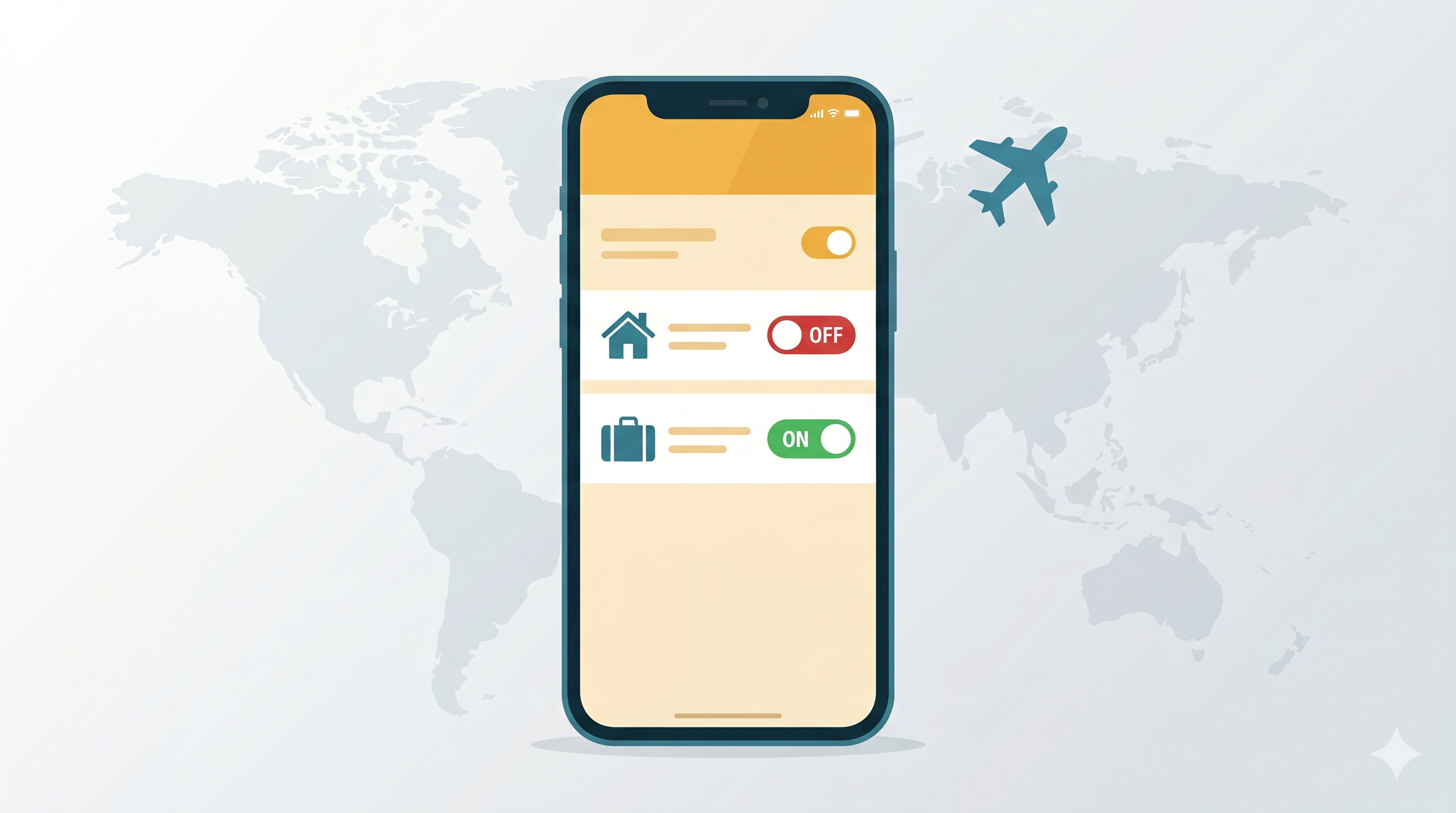
Verify device compatibility. Not every phone supports eSIM, and some carrier-locked devices won't accept third-party eSIM profiles even if the hardware technically supports it. On iPhone: Settings → Cellular → Add eSIM. On Android: Settings → Connections → SIM Manager, and look for an "Add eSIM" option.
If the option isn't there, your device either doesn't support eSIM or is locked to your home carrier — and that's worth knowing before you purchase a plan you can't use.
What SYLA Recommends for Business Travelers
For individual travelers, the framework above narrows your options quickly. For teams, the calculation shifts: you also need centralized visibility into who is using what, predictable costs per employee, and the ability to assign or revoke plans without shipping physical cards.
That's exactly what SYLA Business is built for. Whether you're managing connectivity for five employees or five hundred, you get a single dashboard, transparent bulk pricing, and coverage across 190+ countries — without the expense report chaos.
Want to see how it works for your team? Book a demo and we'll walk you through it.
Start managing eSIMs smarter
See how SYLA Business gives your team global connectivity in 190+ countries from one dashboard.
Book a Demo